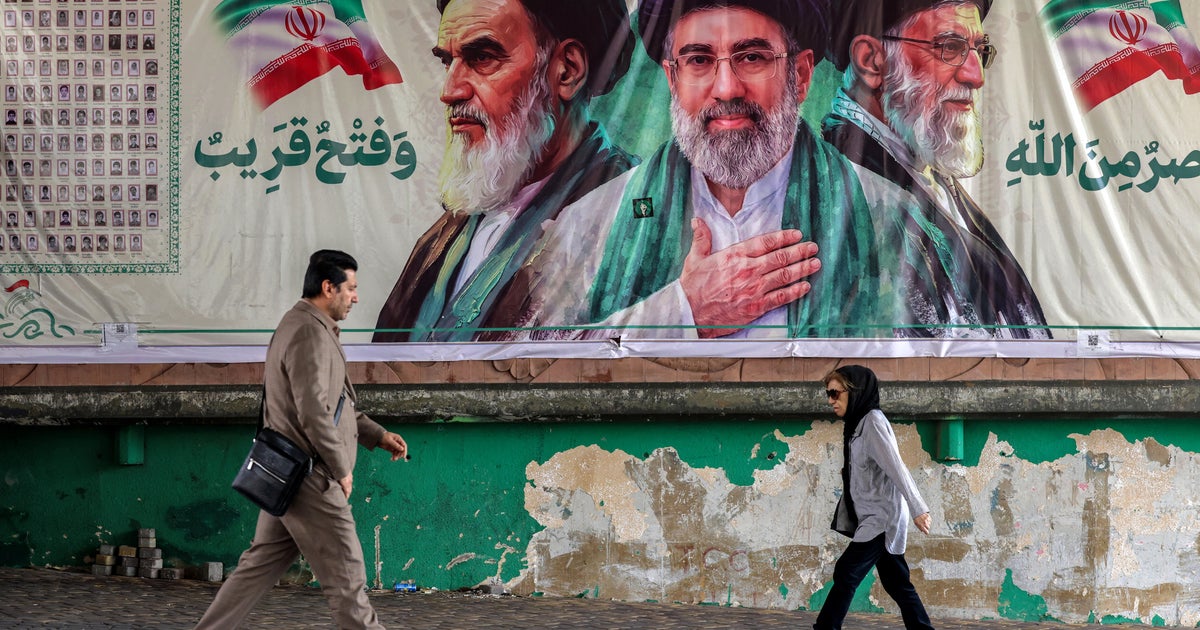
The United States is quietly scaling back its military presence at posts across the Middle East, according to a U.S. official and a senior U.S. military official who spoke to CBS News on Wednesday. The reduction comes as Yemen's Iran-backed Houthi militants continue strikes on Saudi Arabia and as Washington faces what the officials described as direct threats from Iran.
The same day, the U.S. State Department ordered non-essential embassy personnel and their families to leave Saudi Arabia, citing the danger posed by the Houthis. A drone aimed at the Shaybah oil field near the UAE border was intercepted on Wednesday, and the Saudi energy ministry said falling debris from that interception killed two people — a Filipino and a Nepali — and injured two others.
Why it matters
The drawdown signals that Washington is treating the threat to its own personnel as serious enough to thin out its regional footprint, even while it keeps indirect negotiations with Tehran alive. Saudi Arabia, for all its defense spending, has struggled to shield its airports and energy sites from Houthi fire. The kingdom spent $83 billion on defense last year, according to the Stockholm International Peace Research Institute — more than any other country in the Middle East, Israel included.
Oil markets reacted to the tension, with crude jumping $2, Reuters reported.
A deadly week for Saudi aviation and energy sites
An attack on King Fahd International Airport in Dammam on Wednesday evening killed one person and injured eight, according to the kingdom's civil aviation authority. The authority said injuries ranged from minor to serious and that damage to the airport was still being assessed. It did not specify what kind of attack took place, but Saudi airports have been struck repeatedly by projectiles in recent days.
Riyadh's King Khalid International Airport has been hit multiple times this month and was shut down on Oct. 18, according to CBS News. A limited number of Saudi carriers resumed flights at the main airport on Wednesday, two days after authorities told airlines they could restart operations with prior permission. Flight-tracking data from FlightAware showed Saudia and FlyNas flying that day, while major international carriers including Lufthansa and Air France have canceled services through mid-November.
At the Pentagon, officials described the troop adjustments as routine in tone but declined to give specifics. U.S. Central Command spokesperson Capt. Tim Hawkins told CBS News: "We regularly move U.S. service members and assets to optimize mission readiness. We do not discuss related movements for operational security reasons. U.S. forces remain vigilant and ready to protect American personnel and interests across the region."
The State Department's order followed warnings issued days earlier by U.S. embassies in Saudi Arabia, Bahrain, Qatar, the United Arab Emirates and several other countries that hostilities could spread quickly and without notice beyond the areas already affected. CBS News has learned that several U.S. embassies in the region have adjusted staffing under "restricted operations" status — a designation the department introduced in August during flare-ups in the war with Iran, allowing missions to cut staff and services without shutting down entirely.
State Department spokesperson Tommy Pigott said in a social media post that the Houthis "have increasingly engaged in hostilities against Saudi Arabia, including attacks on civilian airports and other critical infrastructure resulting in civilian casualties and severe travel disruptions." He added that the safety of department personnel and their families remains the top priority.
Diplomacy and sanctions move in parallel
Iranian Foreign Minister Abbas Araghchi said Wednesday that Tehran and Washington remain in indirect talks through mediators over a seven-day ceasefire proposal dating from September. President Trump rejected that proposal outright, but Araghchi said the U.S. is now seeking to attach additional clauses to the agreement.
In a post on X, Araghchi wrote that Iran would give diplomacy another chance if it saw strong evidence of a sincere American desire to build trust and reach a just solution. He warned that if the U.S. chooses war instead, it "will certainly result in an even greater strategic failure."
On the financial front, the U.S. Treasury announced sanctions on the Panamanian-Greek law firm Karnakis and Karnakis, accusing it of indirect involvement in Iran's illicit shipping operations over several years as part of an effort called Operation Economic Outcast. The Treasury also sanctioned shipping agents based in Singapore and the UAE, including a group of cargo vessels it said had taken part directly in Iran's "shadow fleet" — tankers that conceal their ownership to evade sanctions — and helped generate substantial revenue for Tehran.
"Whether you are conducting illegal oil transfers at sea or sitting in the corner office of a law firm, if you are supporting the Iranian regime, we will find you and sanction you," Treasury Secretary Scott Bessent said in a statement. He added that facilitators of Iran must choose sides, and that the U.S. knows who they are and what they are doing.
Watch for whether the indirect ceasefire talks produce a revised proposal, and whether the U.S. pullback from regional posts accelerates if Houthi attacks continue.